Carry-On vs Checked Luggage: How to Decide (October 2026)
Choose carry-on luggage for lighter packing and cabin access, or checked luggage when you need more room. Base your choice on your airline’s baggage rules, trip length, and how much you can manage yourself.
On this page (9 sections)
- Carry-on vs checked luggage: which should you choose?
- How much can each bag hold?
- What’s easier to manage at the airport?
- How do baggage rules affect the choice?
- Which bag is easier to pack and organize?
- What should you consider for a longer trip?
- Side-by-side details for the three bags
- How to make the final choice
- Frequently asked questions
Choose carry-on luggage for lighter packing and cabin access, or checked luggage when you need more room. Base your choice on your airline’s baggage rules, trip length, and how much you can manage yourself.
A carry-on lets you skip baggage claim when it travels in the cabin, but your things must fit within cabin rules. Checked luggage allows more space, though you hand it over before boarding and collect it after the flight.
This comparison looks at the everyday trade-offs and three bags: one carry-on and two checked cases. For a broader look at cabin options, see our carry-on luggage buying guide.
Carry-on vs checked luggage: which should you choose?
Choose carry-on for lighter packing and checked luggage for extra room. Checking a larger case also means you won’t need to handle it between bag drop and baggage claim.
A carry-on may reduce waiting at baggage claim, but it doesn’t guarantee a fee-free trip. Airlines set their own cabin dimensions, weight limits, and baggage allowances, so check the rules for every airline on your itinerary.
Checked luggage moves more of your packing out of the cabin. You’ll need to leave time to check it in and collect it after landing, and keep anything you need during the flight in a personal item.
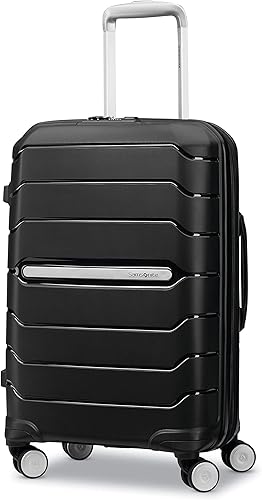
 Best for organized longer trips
Samsonite Freeform 28-Inch Checked Luggage
How much can each bag hold?
The two checked cases offer more packing room than the carry-on here. The amount you can pack depends on the bag’s interior shape, your belongings, and your airline’s weight allowance.
The Samsonite Freeform 21-Inch Carry-On weighs 6.5 lb and has a 34 liter capacity. Its 20.5 x 14.5 x 10 in interior includes elastic straps, a divider, and a pouch.
The Samsonite Freeform 28-Inch Checked Luggage has a 27 x 19.8 x 13 in interior and weighs 9.6 lb. The Kenneth Cole Out of Bounds 28-Inch Checked Luggage measures 29.5 x 20.5 x 11.75 in overall and weighs 9.5 lb.
Interior measurements describe packing space, while exterior measurements determine airline fit. Measure the full outside of your bag, including wheels and handles, before comparing it with your airline’s rules.
Is carry-on luggage enough, or do you need checked luggage for a weekend?
A carry-on often works for a weekend if you pack a small set of clothes and travel-size toiletries. The Samsonite Freeform 21-Inch Carry-On has straps, a divider, and a pouch to help keep the interior arranged.
For a packing plan, see how to pack a carry-on suitcase. If you’re unsure whether a particular cabin bag will fit, our guide to carry-on luggage size explains why you should check the airline’s dimensions.
When does a checked bag make more sense?
A checked bag makes sense when your packing list won’t fit comfortably in a cabin case. Both 28-inch options here offer more room, with the Samsonite adding expansion and the Kenneth Cole using dual-sided packing with compression straps.
The dimensions also affect storage at home and handling on travel day. See our guide to standard luggage sizes to compare common carry-on, medium, and large case dimensions.
What’s easier to manage at the airport?
A checked case reduces what you handle after bag drop, while a carry-on stays your responsibility through boarding. You’ll need to collect and move a checked case after landing.
Bag weight matters before you add anything. The Samsonite Freeform 21-Inch Carry-On weighs 6.5 lb, compared with 9.6 lb for the Samsonite Freeform 28-Inch Checked Luggage and 9.5 lb for the Kenneth Cole Out of Bounds 28-Inch Checked Luggage.
Even a light case can feel heavy after packing. If you’re comparing cabin bags, our guide to carry-on luggage weight limits covers the rules to check before you fly.
All three bags have spinner wheels. Wheels help move a case across a smooth airport floor, but you may still need to lift it into a car, onto a scale, or over steps.
How do baggage rules affect the choice?
Your airline’s baggage allowance sets the limits for either choice. Carry-on and checked bags can each have size limits, weight limits, and fees tied to your ticket.
Measure the full outside of your bag, including wheels and handles. Compare those measurements with the airline’s rules for each flight, especially if your itinerary includes more than one carrier.
Don’t assume that a bag called a carry-on will fit every cabin limit. A model name such as “21-Inch” isn’t a substitute for the bag’s full exterior measurements.
A carry-on may also need to be checked at the gate. Keep medicine, documents, valuables, and other flight essentials in a personal item you can keep with you.
Which bag is easier to pack and organize?
A carry-on suits a smaller packing list, while a checked bag gives you more space to divide up your belongings. The organizers in these three cases help hold items in place.
The carry-on’s straps, divider, and pouch help separate items in its compact interior. Packing essentials within reach can be useful, but you may need to leave behind bulky extras.
The Samsonite Freeform 28-Inch Checked Luggage has elastic straps, a divider, and a pouch, plus an expandable design. The Kenneth Cole Out of Bounds 28-Inch Checked Luggage has dual-sided packing, compression straps, and a hanging zipper pocket.
Keep items you need during the flight in your personal item. That way, you can still reach them if your carry-on must travel in the hold.
What should you consider for a longer trip?
For a longer trip, choose a checked case if you need extra outfits, shoes, or bulky items. A carry-on can still work if you pack lightly or can wash clothes along the way.
Think about the return journey, too. Souvenirs and extra purchases take space, so a close fit on the way out may become a tight fit on the way back.
A larger case can also tempt you to pack more weight. If you expect to handle every bag yourself, consider the packed weight and any stairs or transfers along your route.
Side-by-side details for the three bags
The carry-on is the lightest option here, while the checked cases provide more packing space. Compare their organizers and empty weights alongside your airline’s baggage allowance.
| Product | Best for | Interior size | Weight | Capacity | Our score |
|---|---|---|---|---|---|
| Samsonite Freeform 21-Inch Carry-On | keeping essentials close | 20.5 x 14.5 x 10 in | 6.5 lb | 34 liters | 9.1 |
| Samsonite Freeform 28-Inch Checked Luggage | organized longer trips | 27 x 19.8 x 13 in | 9.6 lb | 8.4 | |
| Kenneth Cole Out of Bounds 28-Inch Checked Luggage | a lighter large case | 9.5 lb | 7.3 |
The Samsonite Freeform 28-Inch Checked Luggage is expandable. The Kenneth Cole Out of Bounds 28-Inch Checked Luggage weighs 0.1 lb less and includes compression straps for its dual-sided interior.
Our score weighs specs and features against what you’re shopping for.
How to make the final choice
Choose carry-on luggage if you can pack within cabin limits and want your bag nearby. Choose checked luggage if you need extra space and can plan for drop-off and baggage claim.
The Samsonite Freeform 21-Inch Carry-On offers a 6.5 lb case with interior organizers. For larger packing loads, choose the Samsonite Freeform 28-Inch Checked Luggage for expansion or the Kenneth Cole Out of Bounds 28-Inch Checked Luggage for dual-sided packing with compression straps.
Start with the airline allowance, then match the bag to your trip and how much you can carry. Our carry-on size guide can help you check the cabin fit before you choose.
Frequently asked questions
Packing needs and airline rules decide between carry-on and checked luggage. These answers cover common trip lengths, baggage combinations, and access to essentials.
Is carry-on or checked luggage better for a week-long trip?
Either can work for a week, depending on how lightly you pack and whether you can do laundry. A carry-on lets you skip baggage claim if it stays in the cabin, while a checked case gives more room for extra clothes or bulky items, subject to your airline’s baggage rules.
What are the main benefits of carry-on luggage?
Carry-on luggage keeps essentials close and lets you skip baggage claim when your bag travels in the cabin. Its smaller size can encourage lighter packing, but check your airline’s size and weight limits and keep essentials in a personal item in case your suitcase must be checked.
When should you choose checked luggage?
Choose checked luggage when you need more room than a cabin bag allows, such as for a longer trip, bulky clothing, or shared packing. You’ll hand the case over before boarding and collect it after the flight, so keep medicine, documents, and other essentials in a personal item.
Can you use a carry-on and a checked bag on the same trip?
Yes, you can bring both if your airline’s baggage allowance permits it, with a carry-on holding items you need during the flight and a checked case carrying the rest. Check whether your ticket includes both bags and confirm the permitted dimensions and weight for each.
How do you choose between carry-on and checked luggage?
Choose carry-on if your essentials fit within cabin limits and you want your bag nearby, or checked luggage if you need more space and can wait at baggage claim. Start with your airline’s baggage rules, then consider trip length, packing needs, and how much you can carry yourself.
Frequently asked questions
Is carry-on or checked luggage better for a week-long trip?
Either can work for a week, depending on how lightly you pack and whether you can do laundry. A carry-on lets you skip baggage claim if it stays in the cabin, while a checked case gives more room for extra clothes or bulky items, subject to your airline’s baggage rules.
What are the main benefits of carry-on luggage?
Carry-on luggage keeps essentials close and lets you skip baggage claim when your bag travels in the cabin. Its smaller size can encourage lighter packing, but check your airline’s size and weight limits and keep essentials in a personal item in case your suitcase must be checked.
When should you choose checked luggage?
Choose checked luggage when you need more room than a cabin bag allows, such as for a longer trip, bulky clothing, or shared packing. You’ll hand the case over before boarding and collect it after the flight, so keep medicine, documents, and other essentials in a personal item.
Can you use a carry-on and a checked bag on the same trip?
Yes, you can bring both if your airline’s baggage allowance permits it, with a carry-on holding items you need during the flight and a checked case carrying the rest. Check whether your ticket includes both bags and confirm the permitted dimensions and weight for each.
How do you choose between carry-on and checked luggage?
Choose carry-on if your essentials fit within cabin limits and you want your bag nearby, or checked luggage if you need more space and can wait at baggage claim. Start with your airline’s baggage rules, then consider trip length, packing needs, and how much you can carry yourself.