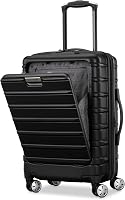
Hardside Luggage: Pros, Cons and What to Look For
Hardside luggage has a firm shell that helps shield packed items, but it can scratch and usually has fewer outside pockets than softside luggage. Choose by shell material, size, wheel setup and the features you will use.
On this page (5 sections)
Hardside luggage has a firm shell that helps shield packed items, but it can scratch and usually has fewer outside pockets than softside luggage. Choose a size that fits your trip, then compare material, weight, wheels and interior layout.
The right hard case depends on what you carry and how you travel. A carry-on may prioritize low weight and compact dimensions, while checked luggage may need more room and a layout that keeps items in place.
What are the pros and cons of hardside luggage?
Hardside luggage offers a firm outer shell and often an easy-to-wipe surface, but the shell can scratch and may limit how much the case flexes. Its interior pockets and dividers vary by model, so check the layout before buying.
A hard case can help shield belongings from scuffs and bumps during travel. It cannot prevent every impact from reaching fragile items, so wrap delicate things and pack them away from the shell.
Some models include expansion, which adds packing space when needed. That extra room can also make the case larger when expanded, so check the full dimensions before using it as a carry-on.
For a fuller comparison of materials and tradeoffs, read hardside vs softside luggage.
Which hardside luggage material should you choose?
Choose a material by balancing weight, shell construction and features. The Samsonite Freeform 21-Inch Carry-On uses polypropylene, while the Samsonite Omni PC 20-Inch Carry-On uses polycarbonate.
The Travelpro Maxlite Air V2 20-Inch Carry-On also uses polycarbonate and has reinforced internal corner guards. Travelpro says its shell flexes on impact to help reduce cracking.
Material alone won't tell you how well a case fits your packing needs. The American Tourister Stratum 2.0 Carry-On has a textured, shiny shell and expands by 1 in, features worth comparing alongside its weight and size.
Surface texture can also affect how visible scuffs are. For more on wear and damage, see does hardside luggage scratch or crack easily?.
What should you check before buying a hard suitcase?
Check the outside dimensions, weight, wheel setup and interior organization before choosing a hard suitcase. These details affect whether it fits your travel plans and how easy it is to pack.
How should hardside luggage dimensions fit your trip?
Match the case size to your trip, and compare its complete outside measurements with the limit you need to meet. Wheels and handles add to a bag's total size, so don't rely on the name “20-inch” or “21-inch” alone.
For carry-on use, check the airline's current size rules before you travel. Our guide to carry-on luggage size explains why overall measurements matter.
A case that expands can be useful for the return trip, but added space may affect whether it fits a size limit. Measure it in the expanded configuration if you plan to use that feature.
How many wheels should a spinner suitcase have?
Compare the wheel setup, rather than choosing by wheel count alone. A dual-wheel spinner can have 8 individual wheels across 4 wheel assemblies, so the count doesn't fully describe how it rolls.
The guide to spinner luggage and wheel types explains the common difference between four-wheel spinners and two-wheel cases. Also check that the handle adjusts to a comfortable height and consider the surfaces you expect to cross.
How much organization do you need inside?
Look for the dividers, straps and pockets that match what you pack. A divided interior can help separate clothes from smaller items, while expansion can provide extra room when a case supports it.
The Samsonite Freeform 21-Inch Carry-On has elastic straps, a divider and a pouch. The Samsonite Omni PC 20-Inch Carry-On has a large expansion gusset and an interior layout with 2 sections.
Which weight and warranty details matter?
Compare the bag's weight and warranty coverage with the size and features you need. A bag's empty weight matters when lifting it into an overhead bin and staying within an airline's baggage allowance.
The Samsonite Freeform 21-Inch Carry-On weighs 6.5 lb, while the Travelpro Maxlite Air V2 20-Inch Carry-On weighs 6.7 lb. Compare that small weight difference alongside their dividers, pockets and expansion features.
Samsonite backs the Samsonite Omni PC 20-Inch Carry-On with a 10-year limited warranty against defects in materials and workmanship. Travelpro offers a limited lifetime warranty against those defects, plus 1 year of airline-damage repair coverage when the bag is bought new and registered.
Which hardside carry-on features are worth comparing?
Compare full dimensions, weight, expansion and interior features before picking a hard carry-on. A feature is useful when it solves a real packing or travel need.
The Samsonite Freeform 21-Inch Carry-On weighs 6.5 lb and has elastic straps, a divider and a pouch. Samsonite describes its textured exterior as scratch-resistant.
The Samsonite Omni PC 20-Inch Carry-On measures 22 in high overall. It has 4 multidirectional spinner wheels, a TSA lock and expansion.
The American Tourister Stratum 2.0 Carry-On measures 22 in high and weighs 7.3 lb. It expands by 1 in and has a modesty pocket, mesh door pocket and elastic tie tapes.
For more models, see best hardside carry-on luggage. If you're deciding between a hard shell and a fabric case, compare their everyday tradeoffs in hardside vs softside luggage.
Is hardside luggage right for you?
Hardside luggage is a good fit if you want a firm outer shell and can pack within its fixed shape. It may be less convenient if you rely on outside pockets or need a bag that can flex around an extra item.
Pick a hard carry-on if its full dimensions fit your travel rules and its weight, wheels and interior suit your packing style. Choose a model with expansion only if you have a use for the added space and can account for its expanded size.
For your next step, check standard luggage sizes and compare them with the space and airline limits you need to meet.
Frequently asked questions
What are the downsides of hardside luggage?
Hardside luggage can scratch, and its fixed shell may offer less flexibility when packing. Many hard cases also lack the outside pockets found on some softside bags, so compare the interior layout, expansion feature and full dimensions before choosing a case for your trip.
Is hardside luggage more protective?
A firm shell can help shield packed items from bumps, but protection depends on the case and how you pack. It does not make fragile items safe from every impact, so wrap delicate belongings and keep them centered with soft items around them during travel.
Which hardside luggage material is best?
There is no best material for every traveler, so compare shell material alongside weight, dimensions and packing features. The Samsonite Freeform 21-Inch Carry-On uses polypropylene, while the Samsonite Omni PC 20-Inch Carry-On and Travelpro Maxlite Air V2 20-Inch Carry-On use polycarbonate.
How do I choose hardside luggage?
Start with the size you need and check the full outside dimensions, including wheels and handles. Then compare shell material, weight, wheel setup, organization, expansion and warranty terms, and confirm your airline's current carry-on size limit before you travel with the bag.